
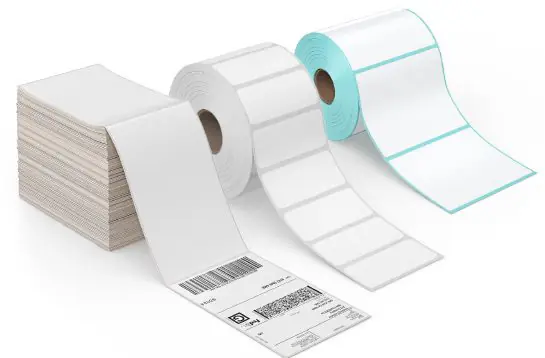
Standardizing industrial direct thermal labels across multiple sites means agreeing on a short list of approved specifications that match each site’s printers and applications, then buying against that list instead of local habits. Not every site can use the same label, so the work is deciding where a shared specification fits and where an exception is justified.
People Also Ask
What Is Label SKU Consolidation?
It is the process of reducing the number of distinct label part numbers an organization buys by merging near duplicate specifications into fewer approved items.
Do Direct Thermal Labels Work for Every Application?
No. Heat, light, and abrasion can affect direct thermal image readability. Assess the selected material against the required label life and exposure conditions.
For teams running several plants or distribution centers, the steps below run from the first inventory to the supplier details that keep reorders consistent.
How Label SKU Proliferation Develops
Label SKUs usually multiply without a decision. A site buys a different size for a new printer, a buyer substitutes during a shortage, or an acquired facility keeps its old part numbers.
Over time, a shipping label of the same dimensions can exist as several items that differ only in core size, perforation, coating, or blank versus preprinted stock. Across the network, that means duplicate purchase orders, scattered safety stock, and specifications nobody can explain.
Consistent labeling also improves asset visibility, a growing manufacturing advantage.
When Label Variations Create Purchasing and Operating Problems
Variation becomes a problem once it costs time or reliability. Spreading volume across many SKUs weakens pricing conversations and complicates forecasting, and a site running low cannot borrow rolls that don’t fit its printers.
On the floor, a roll with an incompatible core size or outside diameter may not fit the printer. Confirm compatibility against the printer specifications. A label whose documented performance does not match the storage and handling conditions may lose readability before the required service life ends. Unreadable labels are one quiet way U.S. manufacturers lose visibility into their own inventory.
A Site Inventory of Printers, Applications, and Label Specifications
For each site, record:
- Printer make and model, print resolution, and the core size and roll diameter it accepts
- Every application: shipping, receiving, work in progress, pallet, inventory, or product identification
- Current label size, facestock and coating specification, adhesive, and perforation
- Annual usage by item
- Environment: temperature, moisture, freezer exposure, and how long the label must stay readable

Pull part numbers from purchase history, not memory. Duplicate SKUs often hide in the difference.
Shared Specifications and Necessary Exceptions
Next, group applications by required readability period, exposure conditions, adhesive performance, and printer compatibility, the same factors used to specify direct thermal labels for your plant. Confirm the selected material’s documented capabilities before approving a shared specification. Discuss the required label format, facestock, and adhesive for your industrial direct thermal labels with Technicode Inc.
Some exceptions are legitimate. Freezer storage, long retention, or heat and sunlight exposure may call for a different adhesive or for thermal transfer, as covered in direct thermal vs. thermal transfer for cold chain and pharma storage. Document the reason for each exception so you introduce additional SKUs only when the application requires them.
Pilot Testing Before Wider Rollout
Test a proposed specification at representative sites first, on every printer model that will use it and in the real application. Check:
- Scan rates at receiving, picking, and shipping
- Adhesion on actual surfaces, including corrugate, stretch film, and cold product
- Print darkness and speed settings needed on each printer, since excessive darkness is one of the factors that can shorten thermal printhead life
- Readability after the label’s full expected handling and storage time
Record successful settings as starting points, then confirm performance on each printer and application before rollout.
Approved Specifications, Substitutions, and Reordering
Once the pilot confirms performance, publish a short approved list with each label’s dimensions, facestock, adhesive, core size, outside diameter, perforation, and covered applications. Each site orders from the approved part numbers assigned to its applications and printers.
Decide substitutions in advance, including which applications an alternate cannot serve. Set reorder points per site from actual usage, and review the list regularly so new requests are checked against existing specifications before a SKU is added.
Supplier Information Needed for Consistent Supply
Give your label supplier the approved specifications and site requirements to support consistent reordering. Share:
- The approved specification for each label
- Printer models in use at each site
- Delivery addresses and expected usage by site
- Which items are stock and which are custom
- Acceptable substitutions
Custom items need more planning because they depend on material availability and production schedules. Knowing why sourcing custom labels is getting harder helps buyers build that time into reorder points.
Building a Coordinated Label Program Across Sites
Standardizing industrial direct thermal labels follows a clear sequence: inventory each site, consolidate where requirements match, test before rollout, and give your supplier enough detail to keep supply consistent. This approach can reduce unnecessary SKUs and help teams manage label compatibility and readability.
Technicode Inc. supplies custom and stock label solutions for industrial businesses across the United States. When standard rolls fall short, teams can specify custom label solutions by size, material, and adhesive.
Frequently Asked Questions
There is no fixed number. Consolidate items where application and printer requirements match, and retain documented exceptions where needed.
Not necessarily. Different printer models may share a label when the label dimensions, media sensing requirements, roll format, and other manufacturer specified requirements are compatible.
A topcoat adds a protective layer that can improve resistance to certain exposures, depending on the formulation. Select either grade according to its documented performance and the application requirements.
Long enough to cover the label’s full working life in the application, including storage and transit, on every printer model that will use it.
Yes. Technicode Inc. supplies custom direct thermal labels specified for particular printers and applications, alongside standard stock rolls.
