Sourcing Custom Labels in a Changing Market
Sourcing custom labels has become more challenging as manufacturers navigate longer lead times, changing material availability, increased customization, and evolving compliance requirements. At the same time, procurement teams are under greater pressure to maintain production schedules while controlling costs and minimizing supply chain disruptions.
This guide explains what’s driving these challenges, the hidden costs buyers often overlook, and the practical steps businesses can take to build a more resilient sourcing strategy. It also explores how experienced label suppliers help manufacturers secure dependable custom thermal labels, thermal shipping labels, and other application-specific labeling solutions.
The key takeaway is that successful sourcing is no longer driven by price alone. Reliability, technical expertise, product consistency, and application knowledge have become essential when evaluating industrial label suppliers. Choosing the right supplier can help reduce production delays, improve operational efficiency, and support long-term business continuity in an increasingly complex sourcing environment.
For many industrial manufacturers, labels have traditionally been one of the easiest packaging components to source. Standard products were readily available, custom orders followed predictable timelines, and procurement teams could rely on established suppliers to keep production moving. That environment has changed.
Today, sourcing custom thermal labels often involves longer lead times, fluctuating material availability, changing compliance requirements, and growing pressure to balance cost with operational reliability. Even businesses that have worked with the same label suppliers for years are encountering new sourcing challenges that can affect production schedules, inventory planning, and customer commitments.
The issue extends beyond the label itself. Every delayed shipment, specification change, or inconsistent print result can disrupt barcode scanning, inventory tracking, regulatory compliance, or shipping operations. As manufacturing becomes increasingly data-driven and automated, labels have become an essential part of operational continuity rather than a simple packaging purchase.
At the same time, buyers are evaluating suppliers differently. Technical expertise, supply chain resilience, inventory management, and the ability to support custom requirements are becoming just as important as competitive pricing. Many organizations are also reassessing whether working with experienced industrial label suppliers can reduce long-term procurement risk.
This guide explains why sourcing has become more challenging, the hidden costs many buyers overlook, and the practical steps procurement teams can take to build a more resilient label sourcing strategy throughout 2026 and beyond.
What’s Actually Making Sourcing Harder Right Now
Several market forces have combined to make label procurement more complex than it was only a few years ago. While conditions vary by industry, most buyers are experiencing some combination of supply chain uncertainty, increased demand for customization, regulatory expectations, and evolving production requirements.
Understanding these challenges helps procurement teams make more informed sourcing decisions instead of reacting only when problems arise.
Greater Supply Chain Complexity
Many supply chains have stabilized compared to previous years. However, industrial manufacturers continue to experience disruptions that affect raw materials, transportation, and production scheduling. Label materials, adhesives, liners, and ribbons may originate from different suppliers before reaching the finished product. This means delays at any point in the chain can influence delivery timelines.
For buyers, this means lead times may vary significantly depending on material availability and order complexity. Organizations that rely on highly specialized label constructions or industry-specific materials may experience even greater variability when sourcing custom products.
Increasing Demand for Custom Label Solutions
Modern manufacturing environments require far more than simple identification labels. Today’s operations often depend on labels that support barcode scanning, asset tracking, traceability, variable data printing, regulatory compliance, and automated warehouse systems.
As a result, demand for custom thermal labels continues to grow across industries such as manufacturing, automotive, aerospace, pharmaceuticals, food processing, and warehouse distribution. These applications frequently require specific combinations of:
- Label materials
- Adhesive performance
- Environmental durability
- Print quality
- Barcode accuracy
- Regulatory compliance
Custom specifications naturally require more planning, engineering review, and production coordination than standard stock labels.
Rising Expectations for Operational Reliability
Manufacturers are placing greater emphasis on minimizing production interruptions and maintaining consistent product quality. A label that fails to scan, peels away prematurely, or becomes unreadable can interrupt workflows well beyond the packaging line.
Procurement teams are increasingly evaluating suppliers based on different essential abilities. This includes delivering consistent quality, maintaining specification accuracy, and supporting long-term operational requirements rather than focusing solely on unit price.
For many businesses, supplier reliability has become a measurable component of production efficiency.
More Complex Regulatory and Customer Requirements
Many industries now operate under stricter labeling expectations than in previous years. Product identification, traceability, safety information, and industry-specific standards continue to evolve, particularly in sectors such as pharmaceuticals, food processing, and aerospace.
Meeting these requirements often involves selecting appropriate materials, ensuring barcode readability, supporting variable data, and maintaining consistent print quality throughout the product lifecycle.
Experienced label suppliers understand these requirements and can help buyers select solutions that align with operational and regulatory expectations, rather than relying on one-size-fits-all products.
The Hidden Costs Buyers Don’t See Coming
When evaluating label sourcing, unit price often receives the most attention. However, the lowest purchase price does not always represent the lowest overall operating cost.
Many sourcing challenges become expensive only after labels reach the production floor.
Production Downtime
Late label deliveries can delay packaging operations, finished goods, and customer shipments. Even a short interruption may create scheduling conflicts throughout the manufacturing process, particularly for facilities operating lean inventories or just-in-time production models.
Barcode and Scanning Failures
Poor print quality, incompatible materials, or incorrect label specifications can reduce barcode readability. This may slow warehouse operations, increase manual data entry, and create inventory inaccuracies that affect downstream processes.
Frequent Supplier Changes
Changing suppliers to address short-term pricing fluctuations often introduces additional qualification work, specification reviews, sample approvals, and production testing. These activities consume valuable engineering and procurement resources while increasing the risk of inconsistencies between production runs.
Inconsistent Label Performance
Different label constructions may perform differently under heat, moisture, chemicals, abrasion, or extended storage conditions. Even small variations can affect product identification, shipping accuracy, or regulatory compliance.
Selecting materials based solely on cost without considering application requirements may ultimately increase replacement costs, production delays, or customer complaints.
Why Domestic Manufacturing Is Becoming a Bigger Part of the Answer
Tariff exposure and long-haul shipping risk have pushed a growing number of manufacturers to prioritize labels and packaging sourced domestically over imported alternatives. Most large manufacturers report plans to move supply chains closer to their end markets, and label materials are part of that shift.
This doesn’t mean reshoring makes sourcing simpler; in many cases it adds complexity. As production moves to more U.S.-based sites, buyers deal with more locations, faster changeovers, tighter compliance windows, and higher SKU counts, all of which put more pressure on label supply rather than less. What it does mean is that access to domestically sourced materials and production capacity has become a genuine differentiator, not a nice-to-have.
This is where working with a supplier that has an established network of manufacturing partners matters. Technicode Inc. sources custom thermal transfer labels, direct thermal labels, barcode labels, and thermal transfer ribbons through a nationwide network of manufacturing partners. This gives buyers access to domestic production capacity and material alternatives without needing to manage that network themselves. Instead of a single converter with a single point of failure, buyers get sourcing flexibility built into the relationship.
Signs Current Supplier Can’t Keep Up
Some warning signs show up well before a supplier actually fails to deliver. Procurement and operations managers should watch for:
Lead Times that Keep Quietly Extending
A supplier who was quoting three weeks six months ago and is now quoting seven, without explanation, is telling something about the own supply chain stability.
Price Increases With No Material Justification
Input cost increases are real right now. However, a supplier who can’t explain why a price moved, or moves it without notice, isn’t managing the volatility; they’re just forwarding it.
Limited Format or Material Flexibility
If a supplier can only offer one adhesive type, one liner, or one label format, there is no fallback when the primary spec runs into a material shortage.
No Visibility Into Order Status
Buyers who have to call and ask about their order instead of getting proactive updates are dealing with a supplier that lacks the systems to manage disruption.
Single-Region or Single-Source Dependency
If the label supplier depends on one facility, one region, or one raw material source, a single disruption can take out the entire label supply at once. This can be an instance of a weather event, a trade policy change, or a force majeure declaration bringing things to a standstill.
Inconsistent Quality Across Reorders
Barcode scan failures, adhesion issues, or color drift between production runs point to a supplier that isn’t tightly managing its own sourcing and production quality.
If two or more of these are showing up, it’s worth evaluating whether the current label suppliers can actually support the volume and reliability of operation needs going forward.
Matching Label Technology to a Harder Sourcing Environment
Part of managing sourcing risk is making sure the label technology itself is matched to the actual operating conditions. The wrong spec adds cost and risk regardless of how stable the supplier is.
Direct Thermal Labels
Direct thermal labels work well for shorter-life applications such as shipping labels, receipts, and short-term tracking. This is where the label doesn’t need to survive months of handling, moisture, or heat exposure. They’re a common choice for thermal shipping labels used in outbound logistics because they’re straightforward to produce and don’t require ribbon.

Thermal Transfer Labels
Thermal transfer labels use a ribbon to bond a more durable image to the label face. This makes them a better fit for applications that need to withstand abrasion, chemicals, UV exposure, or extended shelf life. These are common in manufacturing, automotive, chemical, and warehouse environments where a label has to stay legible for months or years. Custom thermal labels built around the right ribbon-and-substrate combination hold up where direct thermal options won’t.

Barcode Labels
Barcode labels need to be specified around the scanning environment, not just the printer. A barcode label that scans perfectly in a climate-controlled office can fail in a freezer warehouse or on a dusty production floor. This is especially true if the substrate and print method weren’t matched to those conditions.
Thermal Transfer Ribbons
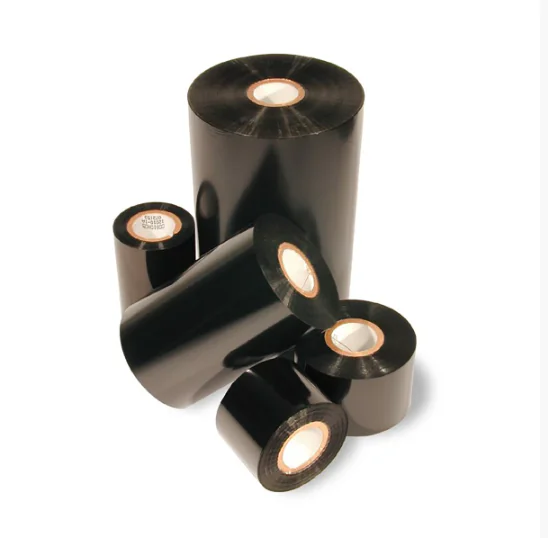
Thermal transfer ribbons matter as much as the label stock itself. Wax, wax-resin, and resin ribbons each perform differently under heat, chemical exposure, and abrasion. Pairing the wrong ribbon with a label substrate is a common cause of premature label failure.
In a tighter sourcing environment, buyers don’t have the margin to over-spec by paying for durability they don’t need or under-spec by risking failure in the field. Getting this right requires a supplier who understands both the materials and the operating environment, not just a price list.
How Sourcing Pressure Shows Up Differently by Industry
The pressures above hit every industrial buyer, but the way they show up and what’s at stake when sourcing goes wrong vary by industry.
Manufacturing and Warehouse/Distribution
High-volume operations feel lead time volatility first, because barcode labels and thermal shipping labels tied to warehouse management and inventory systems are needed continuously, not occasionally. A supply gap here doesn’t just delay one shipment; it can stall put-away, picking, and outbound processes across an entire facility.
Food and Beverage
Food and beverage labels tied to lot codes, allergen statements, and traceability requirements can’t simply be swapped for whatever substrate is available. A material shortage that forces a last-minute substitution risks a compliance gap, which is a far bigger problem than a late shipment.
Pharmaceutical
Pharmaceutical labeling errors or delays carry regulatory weight that other industries don’t face. Buyers in this space need suppliers who can maintain consistency across reorders and document material sourcing clearly enough to satisfy audits.

Automotive and Aerospace
Parts identification and asset-tracking labels often need to survive harsh environments such as heat, chemicals, and prolonged outdoor exposure for the part’s life. These buyers are least able to accept a “close enough” substitute when a preferred substrate or ribbon runs short.
Electronics
Static-sensitive components and small-format labeling leave little room for error. The compliance documentation tied to electronics labeling adds another layer of qualification time whenever a supplier or material has to change.
Chemical and Consumer Products
Labels frequently carry safety, hazard, or regulatory information that has to remain legible under the exact conditions the product will be stored or shipped in, which narrows the pool of acceptable substitute materials during a shortage.
The common thread: the industries with the least sourcing flexibility on paper are often the ones most exposed to the cost of a supply disruption, because compliance and safety requirements remove the option of a quick substitution.
What Buyers Should Actually Do About It
Procurement, packaging, and supply chain managers dealing with this environment have real options. The goal isn’t to eliminate risk; it’s to stop being surprised by it.
Audit Single-Source Exposure
Identify which label SKUs run through only one supplier or one facility, and treat those as risk positions that need a mitigation plan, not routine reorders.
Qualify Alternate Materials in Advance, Not During a Crisis
Waiting until a shortage hits to test a substitute adhesive or liner means qualifying under time pressure. Doing it now gives an approved backup ready when needed.
Push for Supply Chain Transparency From Suppliers
A supplier who can explain where their materials come from, and what backup capacity they have, offers real information to plan around. One who can’t is a bigger risk than their price sheet suggests.
Separate Commodity Labels From Critical-Spec Labels in the Sourcing Strategy
Not every label needs the same level of sourcing redundancy. Focus the most attention on the labels tied to compliance, traceability, or customer-facing quality.
Build in Lead Time Buffer for Custom and Regulated Labels
Custom label orders need planning windows that reflect current material lead times, not pre-2024 assumptions. This is especially true for those requiring specific coatings, die-cut tooling, or compliance documentation.
Work With a Supplier Structured for Redundancy, Not Just Capacity
A single-facility converter can only be as reliable as that one facility. A supplier that sources through a broader network of manufacturing partners can shift production when one part of that network is constrained. This means the buyer does not have to manage multiple vendor relationships directly.
Standardize Specs Across Facilities Where it Makes Sense
Multi-site operations that let each location choose its own label specs end up with fragmented purchasing power and inconsistent quality. Consolidating specs where the application allows it gives buyers more leverage and makes it easier for a supplier to keep material and capacity available when one site’s demand spikes.
Revisit the Sourcing Strategy on a Set Schedule, Not Just When Something Breaks
Treating label sourcing as a periodic strategic review, checking pricing, lead times, and supplier flexibility every quarter or two, catches drift before it becomes a crisis. Waiting for a failure to trigger the review means the review happens under the worst possible conditions.
This is also the point where it’s worth getting a second set of eyes on the current label specs and sourcing setup. A custom label consultation with a supplier who understands both the materials and the sourcing landscape can surface exposure that one might not know they have, before it turns into a line-down event.
Where This Is Headed Through the Rest of 2026
Procurement teams should plan for this environment to persist rather than resolve quickly. Tariff policy remains unsettled, and geopolitical disruption tied to global petrochemical supply continues to introduce volatility into adhesive and resin pricing with little advance warning. Analysts tracking the label converting sector expect consolidation to continue, which means the number of independent, flexible label suppliers is more likely to shrink further than to rebound.
At the same time, the push toward domestically sourced production is accelerating. This is driven by tariff exposure on imported materials and a broader manufacturing shift toward supply chains that sit closer to end markets. For buyers, that means domestic sourcing capacity and network flexibility are becoming more valuable, not less, over the remainder of the year.
The practical takeaway: buyers who treat label sourcing as a strategic function will spend the rest of 2026 managing volatility instead of reacting to it. This means having backup materials qualified, exposure mapped, and supplier relationships built around flexibility.
Preparing for Smarter Label Procurement
Sourcing custom thermal labels, barcode labels, and other custom label formats has gotten harder because the underlying supply chain has gotten more volatile; tariffs, raw material costs, lead times, and supplier consolidation are all moving at once, and most of the real cost shows up after the PO is placed, not on it. Buyers who get ahead of this by auditing exposure, qualifying alternates, and working with a supplier built around sourcing flexibility are in a materially better position than those still buying labels the way they did in 2022.
Technicode Inc. works with procurement, operations, and packaging teams across manufacturing, food and beverage, pharmaceutical, automotive, and electronics to source custom thermal transfer labels, direct thermal labels, barcode labels, and thermal transfer ribbons through a nationwide network of manufacturing partners. If the current label suppliers can’t give clear answers on lead times, material alternatives, or sourcing redundancy, it’s worth a conversation.